Electric bike field guideGuide 002
Find the e-bike that fits your real life.
Compare electric bikes by fit, route, motor behavior, battery, braking, carrying needs, serviceability, and electrical safety—not just the biggest number on the listing.
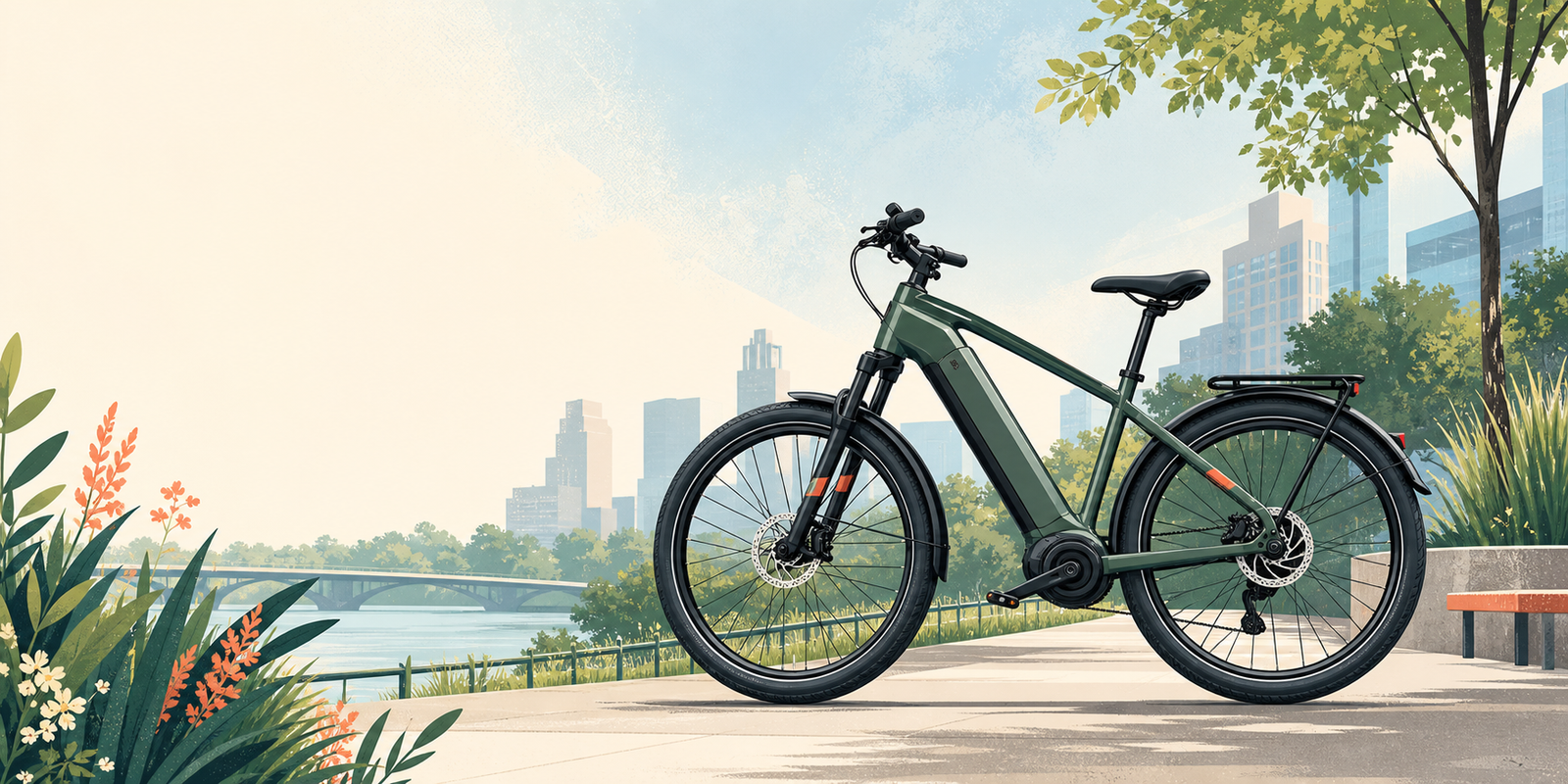
The best e-bike starts with the ride you actually take.
Quick answer
How do you choose the right electric bike?
Start with use and fit, then evaluate the complete system. Decide where you will ride, how far, what you will carry, where the bike will be stored, and whether you must lift it. Then compare frame geometry, motor behavior, usable battery capacity, brakes, tires, controls, certified electrical safety, warranty, replacement parts, and nearby service.
Local e-bike class and trail rules vary. Confirm the bike’s class, throttle behavior, assisted-speed limit, and where it may legally be used before buying.
Choose by use case
Five e-bike styles worth comparing.
These are shopping categories, not permanent product endorsements. Confirm the current seller, specifications, certification, assembly requirements, and warranty on the retailer page.
Commuter e-bikes
Best for: Work trips, errands, pavement, and replacing short car journeys.
Check carefully: Fit, fenders, lights, rack capacity, puncture resistance, and service support.
Check current options on AmazonFolding e-bikes
Best for: Apartments, RVs, mixed transit, and storage-limited riders.
Check carefully: Folded size, carry weight, hinge quality, wheel size, and battery removal.
Check current options on AmazonCargo e-bikes
Best for: Groceries, equipment, child-carrying setups, and family utility.
Check carefully: Total payload, rack ratings, wheelbase, kickstand stability, and compatible accessories.
Check current options on AmazonFat-tire e-bikes
Best for: Riders prioritizing traction, stability, and a cushioned feel on rougher surfaces.
Check carefully: Bike weight, rolling resistance, tire replacement cost, handling, and legal trail access.
Check current options on AmazonStep-through e-bikes
Best for: Comfort, easy mounting, upright riding, and frequent stops.
Check carefully: Frame stiffness, reach, saddle height, brake feel, and the real lift weight.
Check current options on AmazonAs an Amazon Associate I earn from qualifying purchases. Prices, availability, sellers, specifications, and certifications can change. Verify all details before ordering.
Side-by-side thinking
Match the bike to the job.
Use this as a starting filter, then verify fit and handling in person whenever possible.
| Type | Strongest use | Main tradeoff | Measure first |
|---|---|---|---|
| Commuter | Reliable daily transportation | May be less compact or trail-focused | Route, rack needs, storage |
| Folding | Storage and mixed transit | Carry weight and smaller-wheel feel | Folded space and lift height |
| Cargo | People and load carrying | Length, weight, and parking | Payload and accessory fit |
| Fat tire | Traction and rougher surfaces | Weight and rolling resistance | Access rules and transport |
| Step-through | Easy mounting and comfort | Frame and fit vary widely | Reach, standover, saddle range |
Battery and electrical safety
Look past the badge. Verify the certification.
UL 2849 addresses an e-bike’s electrical drive train, battery system, and charger system combination. A claim that a bike is “tested to” a standard is not the same as certification by an accredited third party.
Use only the supplied or manufacturer-approved charger, follow the charging instructions, keep batteries away from heat and damage, and stop using a battery that swells, leaks, overheats, smells unusual, or shows crash damage.
Before you click buy
The 12-point e-bike buying checklist.
Save the listing, write down the answers, and compare complete bikes—not isolated headline specifications.
- Frame size, reach, standover, and saddle range fit the rider
- Bike class and throttle rules match local roads and trails
- Motor behavior suits hills, starts, load, and preferred ride feel
- Battery capacity and realistic reserve fit the usual route
- Brakes and tires suit speed, weather, surface, and total weight
- Total bike weight works for stairs, racks, and storage
- Electrical system has verifiable third-party certification
- Charger, keys, display, and battery replacement are available
- Payload covers rider, cargo, locks, and accessories
- Rack, fender, light, and child-seat compatibility is confirmed
- Assembly and first brake/bolt inspection are planned
- Warranty, return terms, and qualified local service are clear
Fit first. Safety verified. Route matched.
Build a shortlist you can trust.
Compare the bike typesElectric bike FAQ
Common e-bike buying questions.
What type of electric bike is best for everyday commuting?
A commuter e-bike with an upright fit, appropriate frame size, reliable brakes, integrated lights, fenders, and a practical rack is a strong starting point. Confirm total weight, battery removal, local class rules, and whether a nearby shop can service the electrical system.
How much motor power does an e-bike need?
The right motor depends on rider and cargo weight, hills, surface, and local law. Torque, controller tuning, gearing, and bike weight can matter as much as the watt figure. Compare complete-system performance rather than relying on one headline number.
How far can an electric bike travel on one charge?
Real range varies with battery capacity, assist level, speed, hills, temperature, tire pressure, rider and cargo weight, wind, and battery age. Treat advertised range as a scenario, not a guarantee, and plan a reserve for the return trip.
What does UL 2849 mean for an e-bike?
UL 2849 is a safety standard for an e-bike electrical system, including the drive train, battery, and charger system combination. Verify an actual third-party certification rather than relying on vague wording such as designed to meet or tested to a standard.
Are folding e-bikes good for travel and small apartments?
They can be, but check folded dimensions, total lift weight, hinge quality, wheel size, carrying method, battery removal, and whether the folded bike fits the intended car, closet, train, or RV storage space.
What should I check before buying an e-bike online?
Confirm frame fit, assembled weight, rider and cargo limits, class and throttle behavior, brake type, battery and charger certification, replacement-part availability, warranty terms, assembly needs, and access to qualified service.